The Silk Road — the ancient network of trade routes connecting China to the Mediterranean — shaped civilizations for 2,000 years. Today, you can trace these routes through some of the world’s least-visited but most culturally rich countries.
Uzbekistan — The Jewel
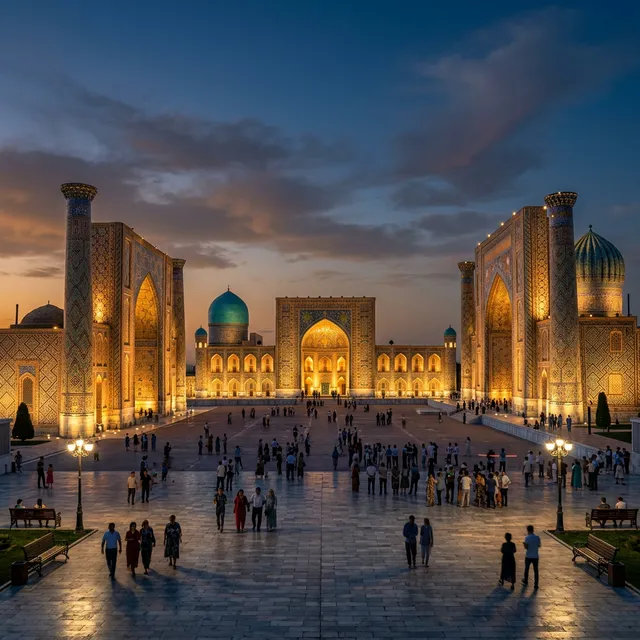
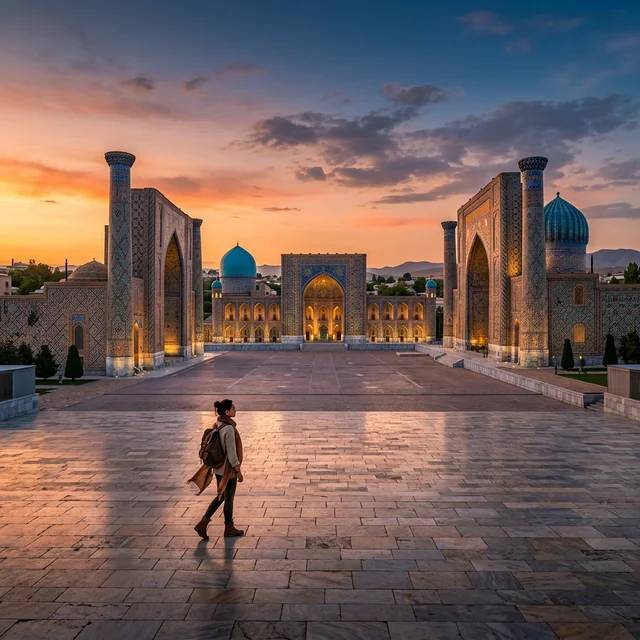
- Samarkand: Registan Square’s three madrasas are among the most photographed buildings in Central Asia. Turquoise tiles, soaring minarets, and Islamic geometry at its finest.
- Bukhara: 140 protected monuments. The Kalon Minaret was so beautiful that Genghis Khan spared it when he sacked the city.
- Khiva: A walled city frozen in time. The entire old town is a UNESCO World Heritage Site.
Kyrgyzstan — Nomadic Soul
Lake Issyk-Kul, mountain yurt stays with nomadic families, eagle hunting traditions, and the epic landscape that Silk Road traders crossed on horseback.
Modern Silk Road Experience
- Night trains between Uzbek cities ($10-20) — atmospheric and affordable
- Shared taxis across the Torugart Pass between Kyrgyzstan and China
- Bazaars that still sell spices, silk, and ceramics as they have for centuries
Final Thoughts
Central Asia is one of travel’s best-kept secrets. The Silk Road cities of Uzbekistan alone justify the trip — architecture that rivals anything in Europe, at a fraction of the cost, with virtually no crowds.