China’s food scene is arguably the most diverse on Earth. The “Eight Great Cuisines” (八大菜系) represent centuries of regional culinary evolution, each shaped by local ingredients, climate, and cultural traditions.
1. Sichuan (川菜) — The Fiery Heart
 Flavor profile: Mala (numbing-spicy), complex layered heat. Known for: Sichuan peppercorn’s unique numbing sensation.
Must-try: Mapo Tofu, Kung Pao Chicken, Dan Dan Noodles, Hotpot, Twice-Cooked Pork.
Where: Chengdu — the world’s first UNESCO City of Gastronomy.
Flavor profile: Mala (numbing-spicy), complex layered heat. Known for: Sichuan peppercorn’s unique numbing sensation.
Must-try: Mapo Tofu, Kung Pao Chicken, Dan Dan Noodles, Hotpot, Twice-Cooked Pork.
Where: Chengdu — the world’s first UNESCO City of Gastronomy.
2. Cantonese (粤菜) — Refined Elegance
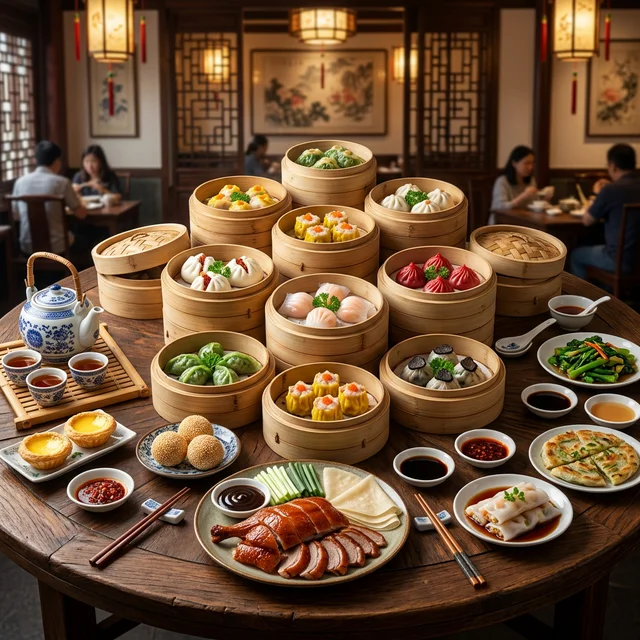
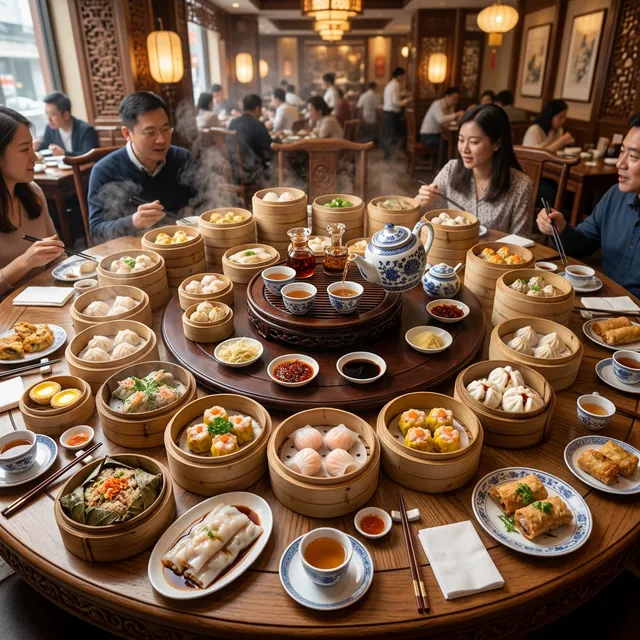
Flavor profile: Light, fresh, emphasizing natural ingredient flavors. Minimal spice. Must-try: Dim Sum, Char Siu (BBQ pork), Steamed Fish, Congee, Roast Goose. Where: Guangzhou, Hong Kong — dim sum capital of the world.
3. Shandong (鲁菜) — The Imperial Tradition
Flavor profile: Salty, savory, rich. Heavy use of seafood and braising. Must-try: Sweet and Sour Carp, Braised Sea Cucumber, Dezhou Braised Chicken. Where: Jinan, Qingdao — the historical foundation of Northern Chinese cooking.
4. Jiangsu (苏菜) — Artistic Precision
Flavor profile: Sweet, delicate, beautifully presented. Known for meticulous knife work. Must-try: Lion’s Head Meatball, Beggar’s Chicken, Yangzhou Fried Rice, Sweet and Sour Mandarin Fish. Where: Nanjing, Suzhou, Yangzhou.
5. Zhejiang (浙菜) — Fresh and Refined
Flavor profile: Fresh, tender, light. Known as “the land of fish and rice.” Must-try: Dongpo Pork, West Lake Fish in Vinegar Sauce, Longjing Shrimp. Where: Hangzhou — one of China’s most beautiful food cities.
6. Fujian (闽菜) — Umami Masters
Flavor profile: Umami-rich, soup-focused, light yet complex. Famous for soups and broths. Must-try: Buddha Jumps Over the Wall, Oyster Omelette, Fish Ball Soup. Where: Fuzhou, Xiamen.
7. Hunan (湘菜) — Pure Spicy Heat
Flavor profile: Intensely spicy (without the numbing of Sichuan), sour, fresh. Uses fresh chili peppers. Must-try: Chairman Mao’s Red Braised Pork, Steamed Fish Head with Chopped Chili, Stir-fried with smoked meat. Where: Changsha — fierce rival to Chengdu for China’s spiciest food.
8. Anhui (徽菜) — Mountain Flavors
Flavor profile: Rich, hearty, using wild herbs and mountain ingredients. Heavy braising and stewing. Must-try: Stinky Mandarin Fish, Bamboo Shoot Stew, Li Hongzhang Hodgepodge. Where: Huangshan region.
Final Thoughts
Chinese cuisine is not one cuisine — it’s at least eight, each as deep and varied as an entire country’s food culture elsewhere. To truly experience China’s food, travel beyond Beijing and Shanghai into the regional heartlands where these traditions live and breathe.