Zum Inhalt springen
TravelGuide
Zurück
Beginner's Guide to Scuba Diving: Everything You Need to Know
Abenteuer

Beginner's Guide to Scuba Diving: Everything You Need to Know

· 7 Min. Lesezeit

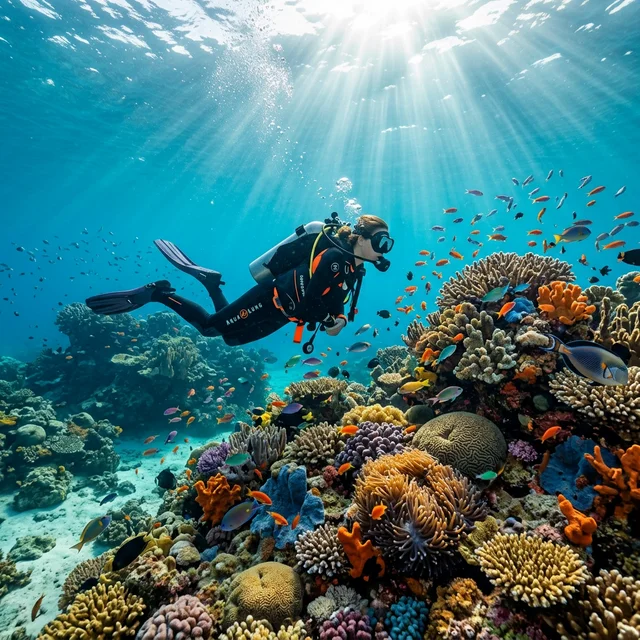
Imagine floating weightlessly in crystal-clear water, surrounded by vibrant coral reefs, kaleidoscopic fish, and marine creatures you’ve only seen in documentaries. Scuba diving opens a door to a world that covers 71% of our planet — a world most people never get to see.

This guide covers everything you need to know to go from curious beginner to certified diver.

What Is Scuba Diving?

Inline Image

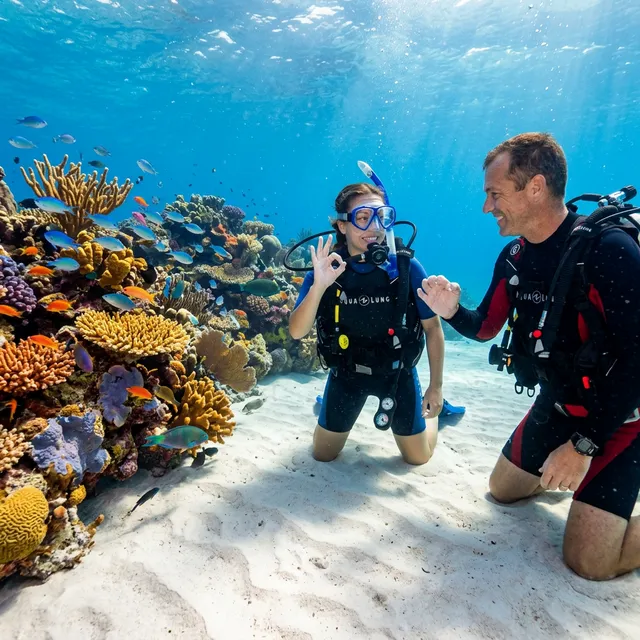
SCUBA stands for Self-Contained Underwater Breathing Apparatus. Unlike snorkeling (surface-level) or free diving (holding your breath), scuba diving uses compressed air tanks and a regulator system that lets you breathe underwater for 30–60+ minutes at depths up to 40 meters.

Getting Certified

The PADI Open Water Diver Course

PADI (Professional Association of Diving Instructors) is the world’s most recognized diving certification body. Their Open Water Diver course is the standard entry-level certification.

What you’ll learn:

  • Dive theory (physics, physiology, equipment)
  • Pool/confined water skills (5 sessions)
  • Open water dives (4 dives in the ocean)

Duration: 3–4 days Cost: $300–600 (varies by location) Minimum age: 10 years old

Where to get certified:

  • At home (any PADI dive center) — convenient but potentially less exciting
  • While traveling — many destinations offer certification courses at competitive prices

Best Places to Get Certified (Great Value + Conditions)

LocationCostWhy It’s Great
Koh Tao, Thailand$250–350The world’s #1 certification destination; warm water, great visibility
Utila, Honduras$250–300Cheapest in the Caribbean; whale shark encounters
Dahab, Egypt$250–350Red Sea coral reefs; calm, clear water
Gili Islands, Indonesia$300–400Sea turtles on every dive; beautiful conditions
Cairns, Australia$400–600Great Barrier Reef; premium experience

Other Certification Agencies

  • SSI (Scuba Schools International) — Similar to PADI, equally recognized worldwide
  • NAUI — More theory-focused, popular in North America
  • CMAS — Common in Europe and South America

What to Expect on Your First Dive

The Feeling

Nothing quite prepares you for the sensation of breathing underwater for the first time. It feels alien and completely natural simultaneously. Here’s what first-timers commonly experience:

  • Excitement mixed with nervousness — totally normal
  • Strange breathing sensation — you’ll adjust within minutes
  • Jaw-dropping visuals — even basic reef dives are stunning
  • Buoyancy challenges — controlling your float takes practice
  • Time distortion — 45 minutes underwater feels like 15

Common Fears (And Why They’re Manageable)

“What if I can’t breathe?” Your regulator delivers air on demand. You’ll practice breathing with it in the shallow pool first. If your regulator fails, you have backup systems and your buddy’s alternate air source.

“What about sharks?” Sharks are rarely interested in divers. Most species are shy and encounters are considered lucky by experienced divers. You’re statistically safer from sharks while diving than while driving to the dive site.

“What if I panic?” Your instructor is trained to manage panic responses. The pool sessions specifically prepare you for stress scenarios. If you ever feel uncomfortable, you can signal to ascend at any time.

“What about pressure on my ears?” You’ll learn to equalize (like what you do on an airplane). Pinch your nose and gently blow — it becomes second nature.

Essential Scuba Gear

What’s Provided (Rental)

Most dive operations provide:

  • BCD (Buoyancy Control Device) — vest that controls your depth
  • Regulator — delivers air from the tank to your mouth
  • Tank — compressed air cylinder
  • Weights — offset your natural buoyancy

What to Buy First

ItemPrice RangeWhy Buy It
Mask$40–150Personal fit is crucial — a leaking mask ruins dives
Fins$50–150Comfort and efficiency; open-heel with booties recommended
Wetsuit$80–300Hygiene + perfect thermal protection for your body
Dive computer$150–500Tracks depth, time, and decompression limits
Snorkel$15–40Useful for surface swimming

When to Buy

Rent everything for your first 20–30 dives to figure out what you like. Once you’re committed to the sport, gradually invest in your own gear starting with mask, fins, and wetsuit.

Top Diving Destinations in the World

For Beginners

Cozumel, Mexico — Crystal-clear Caribbean water with drift dives (the current does the work — you just float along). Visibility often exceeds 30 meters.

Red Sea, Egypt — Some of the world’s best coral reefs are accessible directly from shore. Warm water year-round, excellent visibility.

Great Barrier Reef, Australia — The world’s largest coral reef system. Liveaboard trips offer multi-day immersive experiences.

For Intermediate Divers

Raja Ampat, Indonesia — The planet’s most biodiverse marine region. Over 1,500 fish species and 75% of all known coral species.

Galápagos Islands, Ecuador — Swim with hammerhead sharks, marine iguanas, sea lions, and whale sharks. Strong currents require intermediate skills.

Sipadan, Malaysia — A tiny island with a vertical wall plunging 600 meters into the abyss. Massive schools of barracuda and jacks create underwater tornados.

For Advanced Divers

Blue Hole, Belize — A giant marine sinkhole 300 meters across and 125 meters deep. Stalactites at 40 meters hint at its cave origins.

Truk Lagoon, Micronesia — The world’s greatest wreck diving. Over 60 Japanese WWII ships and aircraft rest on the lagoon floor.

Cenotes, Mexico — Dive through crystal-clear freshwater caves adorned with stalactites and haloclines (where fresh and salt water meet, creating visual distortions).

Diving Safety: The Golden Rules

1. Never Hold Your Breath

This is rule #1 in scuba diving. As you ascend, air in your lungs expands. Holding your breath can cause lung overexpansion — a serious and potentially fatal injury. Breathe slowly and continuously at all times.

2. Ascend Slowly

Always ascend at a rate no faster than 9 meters per minute. A fast ascent can cause decompression sickness (“the bends”) — nitrogen bubbles forming in your blood and tissues.

3. Plan Your Dive, Dive Your Plan

  • Check depth, time, and air supply limits before every dive
  • Stay within your certification level
  • Monitor your air gauge regularly (surface with at least 50 bar / 700 psi remaining)

4. Never Dive Alone

Always dive with a buddy. Check each other’s gear before the dive, stay within visual contact underwater, and know each other’s emergency procedures.

5. Don’t Dive While Sick

Congestion, colds, and ear infections can make it impossible to equalize pressure — risking painful barotrauma (pressure injuries) to your ears and sinuses.

6. Wait Before Flying

After diving, wait at least 18–24 hours before flying. The reduced cabin pressure at altitude can trigger decompression sickness.

How Much Does Diving Cost?

One-Time Costs

  • PADI Open Water certification: $300–600
  • Basic gear (mask, fins, wetsuit): $200–500

Ongoing Costs

ItemCost
Fun dive (2 tanks)$50–120
Equipment rental (full set)$30–50/day
Liveaboard trip (multi-day)$150–300/day
Advanced certification$250–500

Cost-Saving Tips

  • Get certified in Southeast Asia or Central America where prices are 30–50% lower
  • Buy your own gear gradually to eliminate rental fees
  • Join a local dive club for group discounts
  • Dive during shoulder season for off-peak pricing

Environmental Responsibility

The underwater world is fragile. As divers, we have a responsibility to protect it:

  • Never touch or stand on coral — it takes years to recover from even minor damage
  • Don’t chase or harass marine life — observe from a respectful distance
  • Use reef-safe sunscreen — chemical sunscreens damage coral
  • Pick up trash — if you see debris underwater, collect it
  • Improve your buoyancy — good buoyancy control prevents accidental reef damage
  • Support marine conservation — dive with eco-conscious operators

Final Thoughts

Scuba diving fundamentally changes how you see the world. Once you’ve floated with sea turtles, explored a shipwreck, or watched a reef come alive at night, you’ll understand why divers are so passionate about the ocean.

The underwater world is waiting. All you need is the courage to take that first breath underwater.


Diesen Beitrag teilen auf:

Das könnte Sie auch interessieren


Vorheriger Beitrag
Japan Cultural Etiquette Guide: Essential Dos and Don'ts for Travelers
Nächster Beitrag
World's Most Spectacular Festivals: 12 Celebrations Worth Traveling For